RESEARCH
لعبا 'Laeiba'
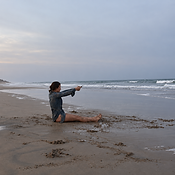
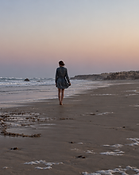
Laeiba meaning 'play' in Arabic, is a video performance piece exploring elements of play through both contact improvisation and the surrounding natural environments of the UAE.
In this 7:45 min performance piece the artists draw upon the idea of what it is to ‘play’ by exploring the body in motion whilst in nature. The artists use improvisation with an underlying framework of active listening, sensorial interaction and playfulness within both their solo dance and when coming into ‘contact' with each other, to meet in a space void of time and place.
Investigating bodies, movement, structure, nature and imagination the narrative will see a protagonist emerge and playfully engage with the ‘other’ through the art form of contact improvisation. The dancers share moments of active listening and witnessing, alongside resistance and weight sharing, this inquiry leads up to a finale which challenges a shift in perspective and reality.

PLAY:
NATURE CONTACT MOVEMENT
"The existence, the physical universe is basically playful. There is no necessity for it whatsoever. It isn’t going anywhere. It’s doesn’t have a destination it ought to arrive at.” – Alan Watts
Play in life and in art is an aspect of experience that is common to both those taking part in it and those who observe. Watching or becoming the observer of those playing brings delight. Improvised and imaginary situations encourage a willingness to suspend disbelief and involve oneself in the premise of imagination.
Rules and games are a metaphor for life. If we decide to break them, we reassert the glorious primacy of free and undirected play, feeling alive again. Contact Improvisation allows us to incorporate progressive movement ideologies such as testing structure, games, pulling, pushing, throwing, lifting and creating a spontaneous environment for play, primal movement, roughhousing and intrinsic exploration.
For this environmental dance piece contact improvisation creates a pathway for the radical act of reconnecting. In the performance we look to remove the 'I'-centered dance or hierarchal positioning methodology found in most solo or partner movement and establish a practice that habituates ‘listening, playing and moving' alongside non-anthropocentric values.